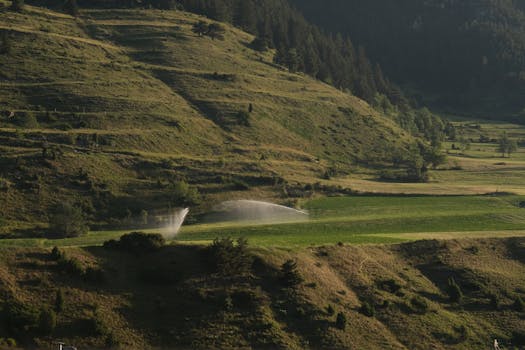

Did you know that inefficient watering practices can account for up to 50% of residential outdoor water use? That’s a staggering amount, especially in regions facing water scarcity. For too long, our lawns and gardens have been on a rigid watering schedule, often receiving more water than they need, or worse, not enough during critical periods. This isn’t just a drain on resources; it’s also bad for plant health and your wallet. Fortunately, a technological revolution is underway, transforming how we approach landscape hydration: smart irrigation systems for efficient watering. These aren’t your grandfather’s sprinklers. They’re intelligent, adaptive systems designed to deliver precisely what your landscape needs, when it needs it, and nothing more.
Why Traditional Watering Falls Short
Let’s face it, a timer-based system is a blunt instrument. It sprays water on a predetermined schedule, regardless of the actual conditions. Imagine watering your lawn heavily on a cool, cloudy day or right after a significant rainfall. It’s counterproductive. Traditional systems often lead to:
Water Waste: Overwatering is rampant, leading to runoff into storm drains and the atmosphere.
Plant Stress: Too much water can drown roots, while too little stresses plants, making them susceptible to pests and diseases.
Uneven Coverage: Many older systems have inconsistent spray patterns, leading to dry patches and waterlogged areas.
High Bills: All that wasted water translates directly into higher utility costs.
The Intelligence Behind Smart Watering
At its core, a smart irrigation system replaces that rigid schedule with real-time data and intelligent decision-making. Instead of just turning on and off at set times, these systems ‘talk’ to their environment. How do they do this?
#### Sensors: The Eyes and Ears of Your System
The true magic starts with sensors. These devices provide crucial environmental data that the system uses to adjust watering cycles.
Soil Moisture Sensors: These are arguably the most important. They directly measure the water content in the soil at root level. If the soil is already adequately moist, the system will skip or shorten the scheduled watering.
Rain Sensors: A classic, but still vital. These sensors detect rainfall and signal the system to hold off on watering until the soil has a chance to dry out.
Freeze Sensors: In colder climates, these prevent sprinklers from running when temperatures are near freezing, avoiding potential damage to pipes and equipment.
#### Weather Data Integration: Looking Ahead
Beyond immediate environmental readings, many advanced smart irrigation systems for efficient watering connect to the internet to access local weather forecasts. This is a game-changer for proactive hydration.
Predictive Watering: If the forecast calls for significant rain in the next 24-48 hours, the system can automatically adjust or skip its next watering cycle.
Evapotranspiration (ET) Adjustments: Smart controllers can factor in historical and forecasted evapotranspiration rates – the combined loss of water from soil evaporation and plant transpiration. This allows for highly precise watering tailored to your specific climate and plant types.
Types of Smart Irrigation Controllers: Finding Your Fit
The market offers a range of smart irrigation controllers, from simple upgrades to fully integrated solutions. Understanding the options helps you choose what’s best for your property and budget.
#### Wi-Fi Enabled Controllers: The Digital Upgrade
These are the most common entry point into smart irrigation. They replace your existing timer and connect to your home’s Wi-Fi network.
App Control: You can monitor and control your system from anywhere using a smartphone app. This means you can adjust settings on the fly or check your system’s status while on vacation.
Weather-Based Adjustments: Most Wi-Fi controllers automatically download local weather data and adjust watering schedules accordingly. This is a significant step up from basic timers.
Reporting and Alerts: You’ll often receive reports on water usage and notifications if there are any system issues.
#### Hybrid Systems: Blending Old and New
Some systems offer a hybrid approach, integrating with existing sensors or providing optional add-ons. This can be a cost-effective way to gain some smart capabilities without a complete overhaul.
#### Fully Integrated Solutions: The Ultimate Control
For larger properties or those seeking maximum efficiency, fully integrated systems might include a network of soil moisture sensors, weather stations, and advanced software. These systems offer unparalleled granular control.
Implementing Smart Irrigation: Actionable Steps
Ready to make the switch? Here’s how to approach getting your landscape on a smarter watering regimen.
#### 1. Assess Your Current System
Before you buy anything, take a good look at your existing irrigation setup.
Zoning: How is your yard divided into watering zones? Are they logical, considering plant types and sun exposure?
Sprinkler Head Performance: Are your sprinkler heads working efficiently? Are they breaking up water into fine droplets or just blasting it out?
Pipe Condition: Are there any leaks or broken heads? A smart controller won’t fix underlying mechanical issues.
#### 2. Choose the Right Smart Controller
Consider your needs:
Budget: Wi-Fi controllers are generally more affordable than fully integrated systems.
Property Size and Complexity: A large, diverse landscape will benefit more from advanced features.
Connectivity: Ensure your Wi-Fi signal is strong enough to reach the controller location.
Ease of Use: Look for an intuitive app and interface.
#### 3. Installation is Key
While some Wi-Fi controllers are relatively straightforward DIY installations, others, especially those involving multiple sensors, might be best left to a professional.
Consult Local Experts: Irrigation specialists can advise on the best products for your climate and soil type, and ensure proper installation.
Follow Manufacturer Instructions: If you are doing it yourself, read the manual thoroughly.
#### 4. Fine-Tuning for Optimal Performance
Once installed, the “smart” aspect truly comes into play with proper configuration and ongoing monitoring.
Input Plant Types and Soil Data: The controller needs to know what you’re watering (lawn, shrubs, flowers) and the soil’s water-holding capacity.
Adjust Watering Windows: Set the times when watering is most efficient, usually early morning or late evening, to minimize evaporation.
Regularly Review Usage Reports: Most apps provide valuable data. See how much water you’re using and if adjustments are needed.
Update Settings as Seasons Change: While smart systems adapt, manual overrides or parameter updates might be necessary for significant seasonal shifts.
The Long-Term Benefits of Efficient Watering
Investing in smart irrigation systems for efficient watering is more than just a convenience; it’s a strategic decision with tangible rewards.
Significant Water Savings: This is the most immediate benefit. You’ll likely see a noticeable drop in your water bills, sometimes by as much as 30-50%.
Healthier Landscapes: Plants receive the precise amount of water they need, leading to stronger root systems, better growth, and increased resilience to stress.
Environmental Stewardship: By conserving water, you’re contributing to a more sustainable environment, especially crucial in drought-prone areas.
Increased Property Value: A well-maintained, water-efficient landscape is an attractive feature for potential buyers.
Peace of Mind: Knowing your landscape is being watered optimally, even when you’re away, offers considerable relief.
Wrapping Up
The shift towards smart irrigation isn’t just a trend; it’s a necessary evolution in how we manage our precious water resources. By embracing technology that understands and responds to the dynamic needs of your landscape, you move beyond the guesswork of traditional watering. This leads to a healthier, more vibrant outdoor space, substantial cost savings, and a more sustainable approach to property management. Making the transition to smart irrigation systems for efficient watering is a practical, powerful step towards a greener future, one precisely watered drop at a time.